Crowns and Bridges in Amsterdam

A damaged or missing tooth can make chewing difficult and leave you feeling self-conscious about your smile. With a crown or bridge, we restore the shape, function and appearance of your teeth. The dentist matches the colour and shape to the rest of your teeth. Are you anxious about visiting the dentist? Then we explain in advance how the treatment works and tell you what we are doing at every step.

  • Experience in treating anxious patients
  • Clear explanations before and during treatment
  • Patients rate our practice 9.8 on average

What is a crown or bridge?

A crown is a custom-made cap that the dentist places over a damaged or weakened tooth. The crown restores the shape and function of the tooth and prevents further damage. We usually make crowns from porcelain or ceramic and match the colour and shape to your teeth.

A bridge replaces one or more missing teeth. It consists of an artificial tooth with crowns on either side that rest on the adjacent teeth. Sometimes the dentist places a bridge on implants.

A tooth can be weakened by a large filling, a fracture, wear or a root canal treatment. The dentist assesses whether a crown or bridge suits your situation.

Tandarts toont een patiënt een model van kronen en bruggen in een moderne praktijk

When is a crown or bridge needed?

A crown may be needed when the dentist can no longer adequately restore a tooth with a filling. A bridge can replace a missing tooth.

Possible situations include:

  • A large part of the tooth has broken off.
  • There is a deep crack in the tooth.
  • A tooth has been weakened after a root canal treatment.
  • One tooth is missing.
  • One or more teeth are heavily worn.
  • A large filling has left little healthy tooth tissue.

Not sure whether a crown or bridge is needed? The dentist examines your teeth and discusses which treatment is suitable.

How does a crown or bridge treatment work?

A crown or bridge treatment usually involves two appointments. Between these appointments, a dental laboratory makes the crown or bridge to measure. An appointment often takes thirty to sixty minutes, depending on the treatment.

Step 1: preparing the tooth

The dentist numbs the treatment area and shapes the tooth. This creates enough room for the crown. For a bridge, the dentist prepares the teeth on either side of the gap.

Step 2: impression or digital scan

The dentist takes an impression or digital scan of your teeth and records how your upper and lower teeth meet. The dental laboratory uses this information to make the crown or bridge.

Step 3: choosing the colour

The dentist compares different shades with the surrounding teeth and chooses a matching colour together with you.

Step 4: fitting a temporary restoration

You receive a temporary crown or bridge that protects the treated teeth until the permanent restoration is ready.

Step 5: fitting the permanent crown or bridge

During the second appointment, the dentist removes the temporary restoration. The dentist then checks the fit, margins and bite. If everything is in order, the dentist secures the permanent crown or bridge with dental cement.

The dental laboratory usually needs a few weeks to make the crown or bridge. The dentist will tell you in advance when the second appointment will take place.

What will you notice after a crown or bridge treatment?

After the treatment, the tooth and surrounding gum may be temporarily sensitive. You may also feel some pressure when chewing. These symptoms usually ease within a few days.

  • Wait until the anaesthetic has completely worn off before eating.
  • Brush the crown, bridge and gum line carefully every day.
  • Eat carefully while the treated area is still sensitive.
  • With a bridge, clean the space beneath the artificial tooth and along the surrounding teeth every day, for example with an interdental brush or special floss.
  • Visit the dentist for check-ups as advised for your oral health.

Does the pain persist, does the sensitivity increase, or does the crown or bridge feel loose? Then contact us. The dentist will check the fit, the bite and how the crown or bridge is attached.

What are the pros and cons of a crown or bridge?

Whether a crown or bridge is suitable depends on the condition of your teeth. The dentist discusses the expected benefits and possible drawbacks beforehand.

Benefits

  • A crown protects a damaged or weakened tooth and helps to preserve it.
  • A bridge fills the gap left by a missing tooth.
  • You often chew and speak better.
  • The dental technician matches the shape and colour to the surrounding teeth.
  • With good oral care, a crown or bridge lasts for several years.

Drawbacks

  • The treatment usually involves two appointments.
  • The dental laboratory costs form part of the total treatment cost.
  • For a crown, the dentist removes part of the tooth.
  • For a conventional bridge, the dentist usually also reshapes the adjacent teeth.
  • Over time, a crown or bridge can wear, become damaged or come loose.

What are the consequences of delaying, and what alternatives are there?

A damaged tooth usually does not heal on its own, and a missing tooth does not grow back. Delaying often makes the damage worse.

Possible consequences:

  • The tooth breaks down further
  • Teeth shift into the gap
  • Pain or inflammation develops
  • The treatment becomes more extensive later on

A crown or bridge is not always necessary. For limited damage, a filling is enough. If a tooth is missing or cannot be saved, an implant with a crown is an alternative that avoids reshaping the adjacent teeth. In the case of inflamed gums, we treat this first through periodontology. The dentist discusses the options with you.

The cost of a crown or bridge

The rates for crown and bridge work are fixed throughout the Netherlands. Each year, the Dutch Healthcare Authority (NZa) sets these maximum rates anew. You will find a full overview on our rates page.

Is a crown or bridge covered by insurance?

For adults, basic health insurance does not cover crown and bridge work in most cases. With supplementary dental insurance you often get part of the cost back, depending on your policy. We draw up a clear cost estimate in advance. Ask your health insurer about your exact reimbursement.

2026 rates

Procedure code Description Rate
R24 Crown on a natural tooth €330.07
R40 First bridge pontic €225.05
R45 Surcharge per additional bridge pontic (conventional bridge) €112.53
R80 Temporary crown and bridge work, first tooth €37.51

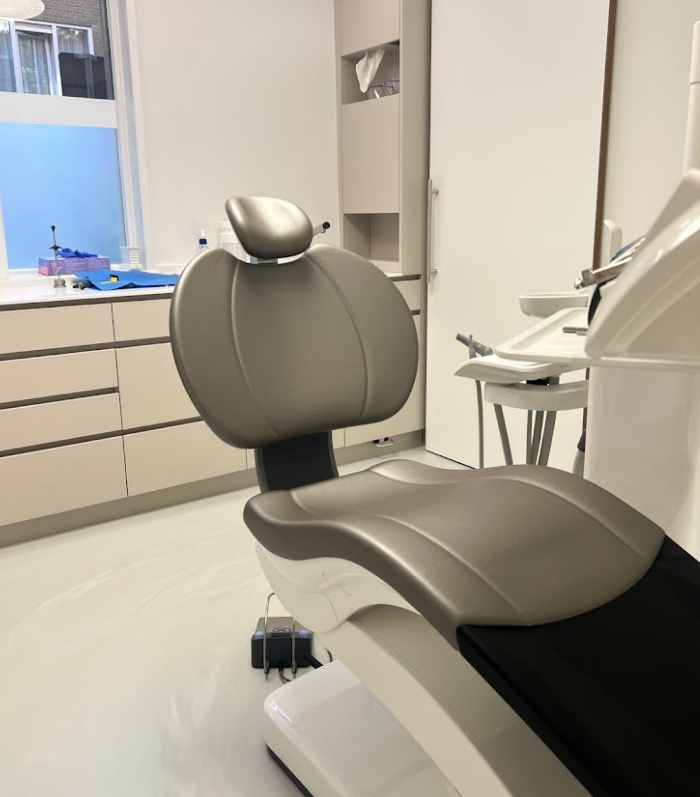
Treatments in our modern practice

Make an appointment at our practice

Would you like to restore your teeth with a crown or bridge? Our team in Amsterdam-West and Amsterdam-Zuid is ready to help and guides you through every step. New patients are very welcome. Make an appointment today.

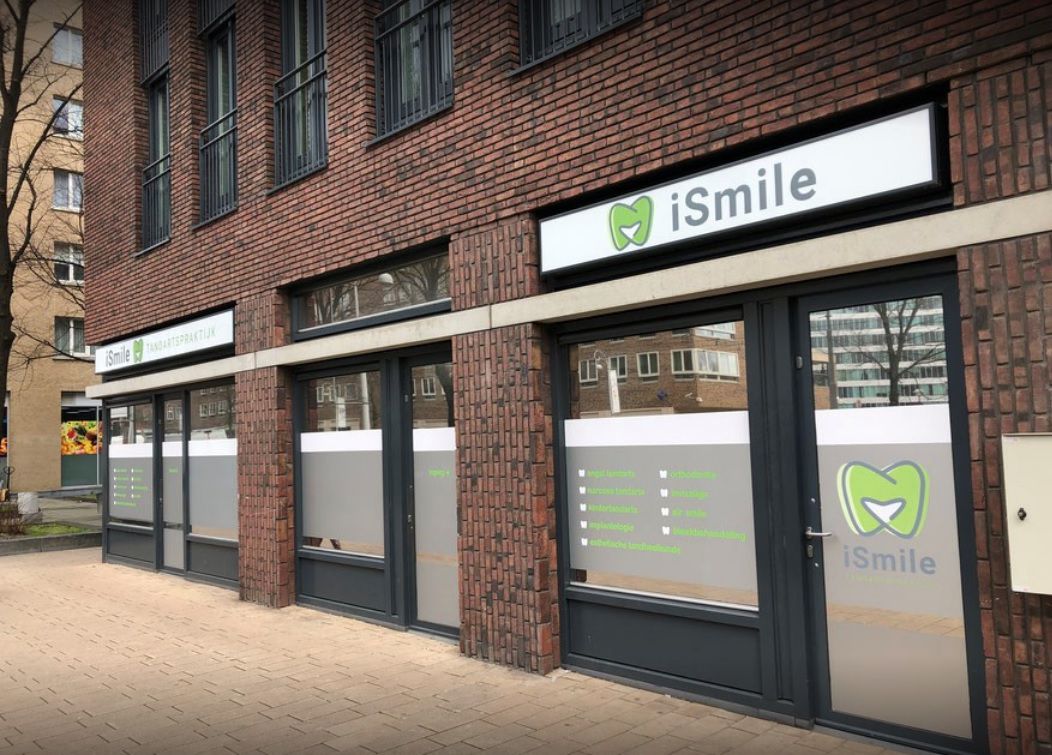
Visit iSmile Dental Practice in Amsterdam-West

Our dental practice in Amsterdam-West is easy to reach, whether you come by car, bike or public transport.
By car
You can park at Bos en Lommerplantsoen or in the Mobypark – Zahia’s Parking car park, both close to the practice.
By bike
You can easily park your bike in front of the practice entrance.
By public transport
The Erasmusgracht and Bos en Lommerplein stops are within walking distance and bring you quickly to our location.

Visit iSmile Dental Practice in Amsterdam-Zuid

Our dental practice in Amsterdam-Zuid, on Lutmastraat, is also easy to reach by any means of transport.
By car
You will find parking on Lutmastraat itself, a short distance from the practice.
By bike
You can easily leave your bike in the racks across the street.
By public transport
The De Pijp and Cornelis Troostplein stops are both nearby and within walking distance.