Nederlands

Your child’s first visit to the children’s dentist
The best time for your child’s first visit to the children’s dentist is around their second birthday. That first visit is mainly a chance to get acquainted: your child gets used to the chair and, if they want to, lets us take a quick look inside their mouth. Nothing has to happen, and a treatment is usually not planned yet. Many parents wonder what to expect and how to prepare their child well. Below you can read when to plan the first visit and what happens during that appointment. With that knowledge, you and your child walk into the practice relaxed.
When should your child first see the dentist?
We advise bringing your child to the practice around the age of two. By then most baby teeth are in, and a two-year-old is curious enough to look around. The first contact can be low-key. If you bring your child along to your own periodic check-up, for example, they first watch while the dentist looks at your teeth. After that, your child gets their own appointment. Do not wait until there are complaints, because a first visit without pain or worries feels much more pleasant for a young child and lays a good foundation for the years ahead.
How do you prepare your child?
A light-hearted explanation at home helps more than a long story. Tell your child that the dentist will take a quick look at their teeth to see if everything is fine. Children often pick up on their parents’ tension without anyone noticing, so stay relaxed yourself and avoid words like pain or injection. A few practical points help:
- Plan the appointment at a time when your child is well rested, not just before a nap.
- Brush your child’s teeth at home before the appointment, so the dentist sees the teeth clearly.
Playing dentist at home with a toy dentist kit is another way to help young children get used to the situation.
What happens during the first visit?
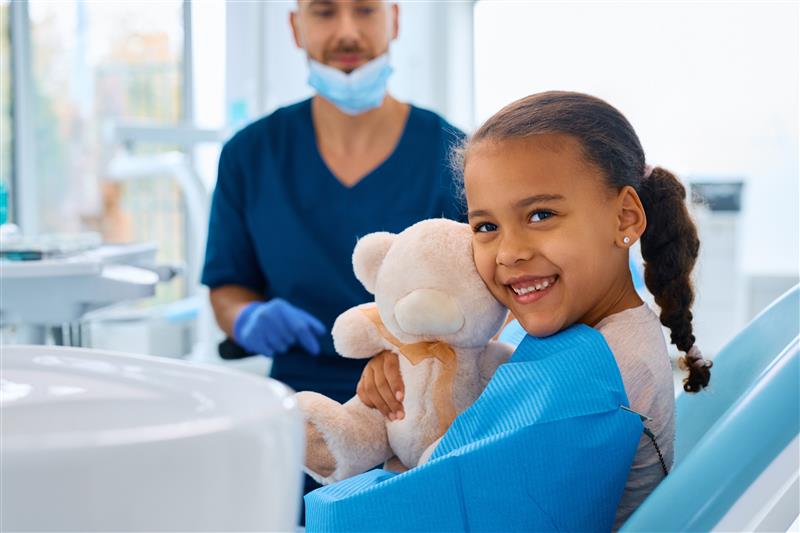
During the first visit your child largely sets the pace. Our children’s dentist adapts words and pace to your child, so they understand what is happening in a playful and calm way. You stay close by throughout the appointment; a familiar face next to the chair often makes a big difference. A first visit is short, because a young child’s attention span is limited. If we cannot look inside the mouth the first time, that is no problem. We then calmly plan a new appointment, and the second visit is often much easier.
Getting to know the practice and the chair
The visit usually starts with a look around. Your child sees the treatment room and the chair with the lamp above it, and may sit in the chair or stay on your lap. We show the little mirrors and the lamp and explain in everyday words what they do. If your child feels at ease, we let the chair go up and down for a moment. It seems a small moment, but this playful way of getting used to things determines how your child experiences the next appointments. A child who already knows the practice before anything is wrong comes back later with more confidence.
A first look at the teeth
If your child is happy with it, our children’s dentist takes a quick look inside the mouth. We check how the baby teeth are coming through and whether the gums and enamel look healthy. Sometimes we count the teeth together, which most children enjoy. After the check you receive advice on brushing and on eating and drinking. We advise brushing twice a day with a toddler toothpaste with fluoride and brushing your child’s teeth after them until they are about eight. If the dentist sees anything that needs attention, we discuss it calmly with you.
What happens after the first visit?
After the first visit we schedule the next check-up. At these check-ups we calmly examine the teeth and assess how the teeth and molars are developing. Sometimes we take an X-ray to see clearly how the teeth are developing. If the teeth need extra protection, we strengthen the enamel with a fluoride treatment. Molars with deep grooves we seal: we then apply a thin protective layer over the chewing surface. With this preventive care we prevent cavities as much as possible, and every next appointment remains an ordinary, calm moment for your child.
What does the first visit cost?
For children under 18, the Dutch basic health insurance (basisverzekering) covers most dental treatments. The first visit and the check-ups after it are included, as are fillings and preventive treatments such as fluoride and sealing. Children also have no deductible (eigen risico). A few treatments usually fall outside the basic insurance, such as a brace and crowns or bridges. If you have supplementary insurance, (partial) reimbursement is often possible for these. The exact cover differs per health insurer, so if in doubt, check your policy before a larger treatment starts. If a treatment falls outside the basic insurance, we always discuss the costs with you in advance.
Registering your child with iSmile
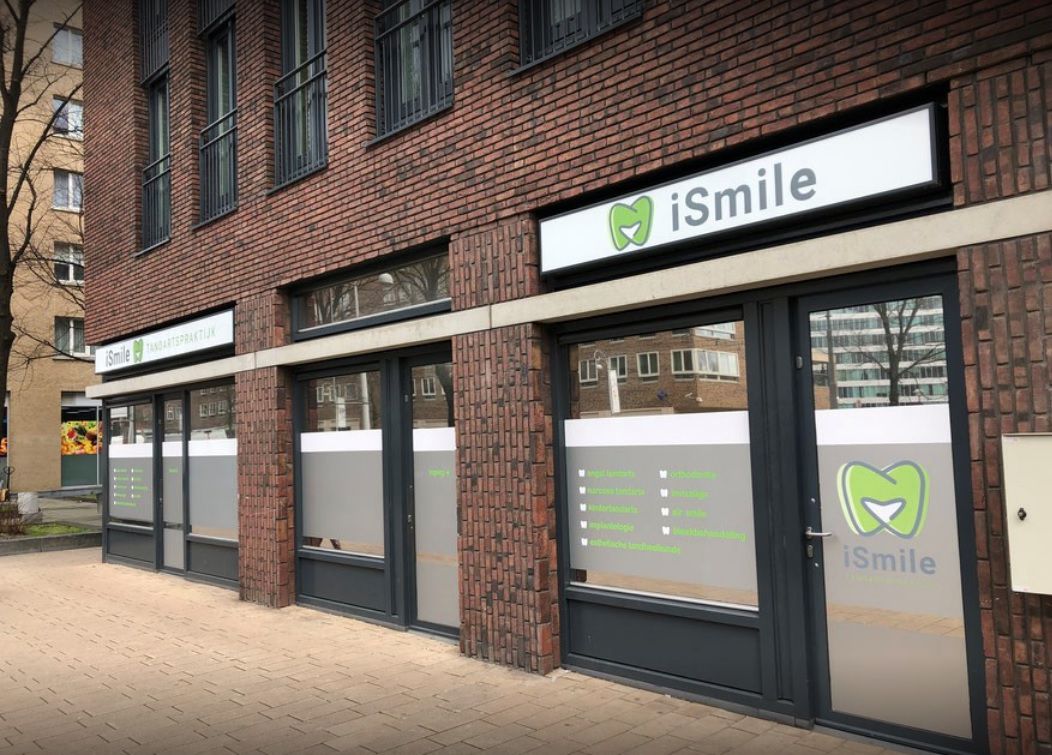
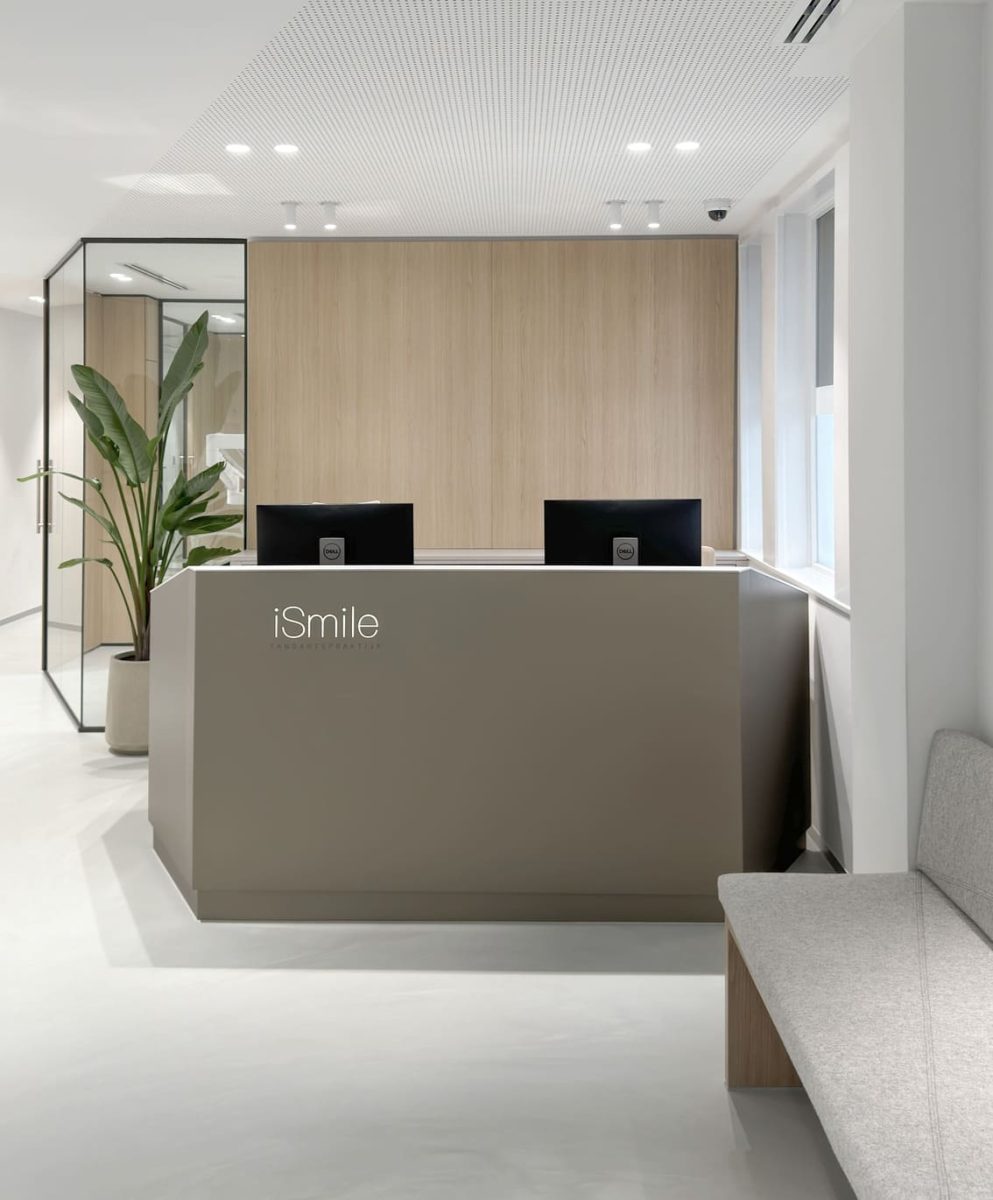
At iSmile Dental Practice we take our time for young patients. Our children’s dentist in Amsterdam explains everything in calm and clear language and monitors the development of the teeth from the very first visit. If your child still finds the dentist very scary, we offer extra support, such as laughing gas or, in special cases, treatment under anaesthesia. We welcome new patients at our practices in Amsterdam-West on Hoofdweg and in Amsterdam-South on Lutmastraat. In West we are also open on Saturdays, which many families find convenient. Register your child, and together we plan a calm first visit.
Frequently asked questions about the first visit to the children’s dentist
At what age does my child first go to the children’s dentist?
We advise around the age of two. Your child then gets familiar with the practice in a playful way, before there are any complaints.
How long does the first visit to the children’s dentist take?
The first visit is short, because a young child’s attention span is limited. Your child largely sets the pace.
What if my child does not want to sit in the chair?
That is no problem. Your child may stay on your lap. If we cannot look the first time, we calmly plan a new appointment.
Should I bring my child to my own check-up?
You do not have to, but it does help. Your child first watches and gets used to the treatment room, before it is their turn.
Is the first visit to the children’s dentist free?
Yes, for children under 18 the basic insurance covers the check-ups. Children have no deductible.
Which toothpaste does my child use after the first visit?
Young children brush twice a day with a toddler toothpaste with fluoride. Older children later switch to an adult toothpaste.
What if my child is scared of the dentist?
We take our time and adapt the pace to your child. If needed, we offer extra support, such as laughing gas.